Blog
BMW Design Philosophy: Innovation, Performance, and the Future of Mobility
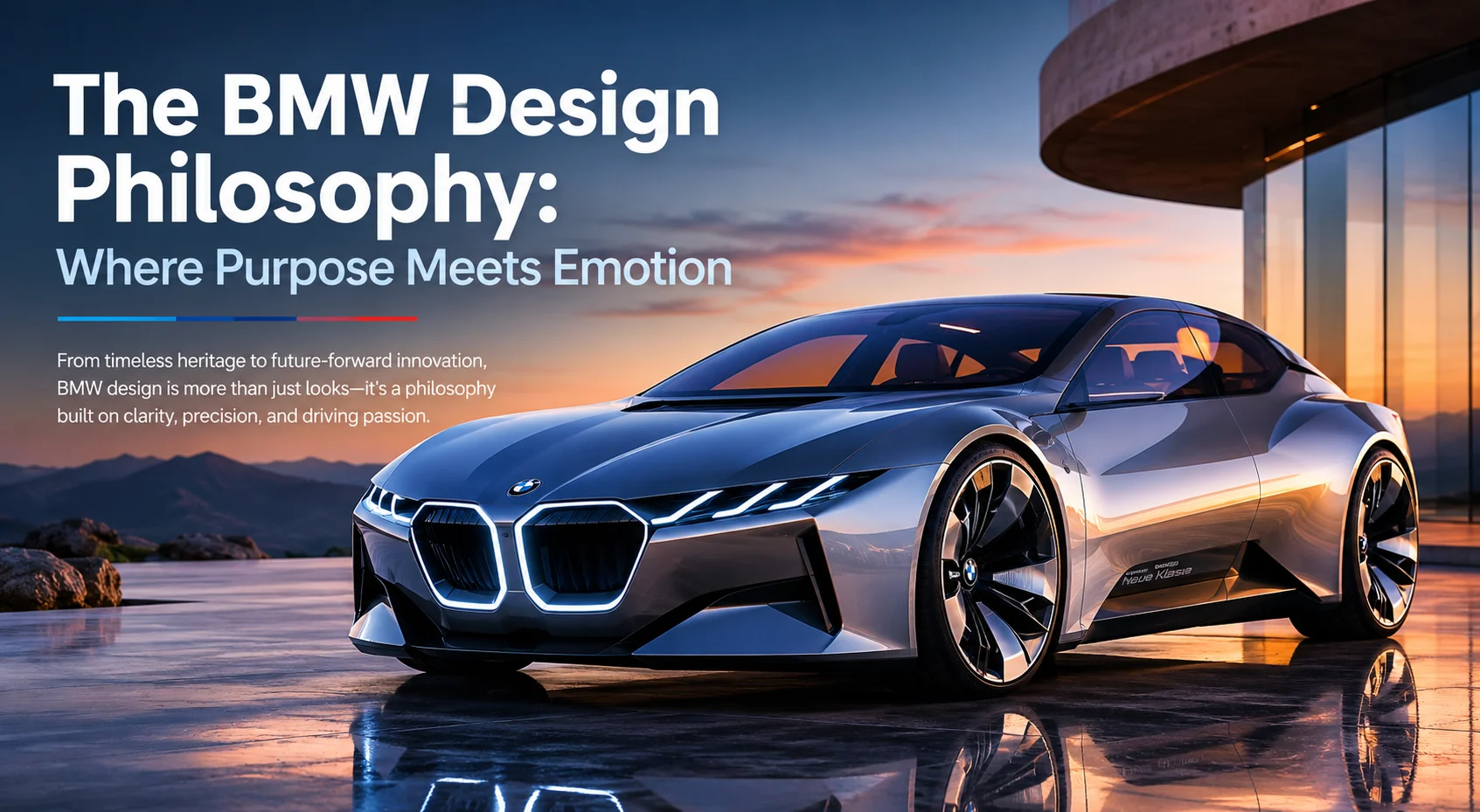
The BMW Design Philosophy: Where Innovation Meets Emotion
For more than a century, BMW has built its reputation on engineering excellence and driving pleasure. Yet behind every iconic BMW lies something equally important: a distinctive design philosophy. BMW design is not merely about creating attractive vehicles—it is about shaping experiences that connect technology, performance, and human emotion into a single cohesive vision.
As the automotive industry evolves toward electrification, sustainability, and digital mobility, BMW continues to redefine what modern automotive design can be while remaining true to its core identity.
Design with Purpose
At the heart of BMW’s design philosophy is a simple principle: every design element should serve a purpose.
Rather than adding features solely for visual impact, BMW designers focus on creating forms that enhance functionality, aerodynamics, comfort, and driving dynamics. Every contour, surface, and proportion contributes to the vehicle’s overall performance and character.
This purpose-driven approach results in vehicles that feel balanced and intentional. Whether viewed from the front, side, or rear, a BMW communicates confidence, precision, and movement—even when standing still.
The Power of Proportion
One of the most recognizable characteristics of BMW vehicles is their athletic stance.
Long wheelbases, short overhangs, and carefully sculpted body lines create a sense of dynamism that has become a hallmark of the brand. These proportions are not accidental; they reflect BMW’s commitment to rear-wheel-drive performance architecture and optimal weight distribution.
Even as electric platforms become more common, BMW continues to preserve these fundamental design principles, ensuring that future models maintain the visual excitement associated with the brand.
Less, But Better
Modern BMW design embraces the concept of reduction.
Instead of overwhelming the driver with unnecessary complexity, designers strive for clarity and simplicity. This philosophy is particularly evident in the interior design language of recent BMW models.
Digital displays, intuitive interfaces, and streamlined controls create a clean environment where technology supports the driving experience rather than distracting from it. The result is a cabin that feels both luxurious and user-focused.
Minimalism, however, does not mean sacrificing emotion. BMW carefully balances clean design with expressive details that evoke excitement and individuality.
Human-Centered Innovation
Technology is transforming the automotive landscape, but BMW believes innovation should always begin with people.
From advanced driver assistance systems to immersive digital interfaces, every technological feature is designed around enhancing the relationship between driver and vehicle. The goal is not to replace the human experience but to elevate it.
This human-centered approach influences everything from cockpit layouts and seating ergonomics to lighting design and digital interactions. BMW’s designers work closely with engineers to ensure that technological advancements feel natural and intuitive.
Sustainability as a Design Principle
Sustainability is becoming an increasingly important component of automotive design, and BMW has integrated it into every stage of the creative process.
The company is exploring recycled materials, renewable resources, and circular design strategies that reduce environmental impact without compromising premium quality. Sustainable design is no longer viewed as a limitation but as an opportunity for innovation.
Future BMW vehicles will continue to demonstrate how luxury, performance, and environmental responsibility can coexist harmoniously.
The Evolution of the Iconic Kidney Grille
Few automotive design elements are as recognizable as BMW’s kidney grille.
Over the decades, the grille has evolved to reflect changing technologies, market demands, and design trends while remaining a defining brand signature. In the era of electric mobility, its function is changing, but its symbolic importance remains.
BMW’s designers see the kidney grille not merely as a styling feature but as a visual connection between the company’s heritage and its future.
Designing for the Electric Era
The transition to electric mobility presents new opportunities for automotive designers.
Without the packaging constraints of traditional combustion engines, BMW can explore new proportions, spacious interiors, and innovative aerodynamic solutions. Concept vehicles such as the BMW Vision series demonstrate how the brand is reimagining mobility through bold forms, advanced materials, and intelligent digital experiences.
These concepts offer a glimpse into a future where vehicles become more connected, sustainable, and personalized while preserving BMW’s commitment to driving pleasure.
Emotional Design in a Digital World
As vehicles become increasingly digital, emotional design becomes even more important.
BMW believes that cars should inspire passion, not just provide transportation. Through carefully crafted surfaces, distinctive lighting signatures, and engaging user experiences, BMW seeks to create vehicles that establish emotional connections with their owners.
This focus on emotion ensures that BMW remains more than a technology company—it remains a brand built around the joy of driving.
Looking Ahead
BMW’s design philosophy is a continuous balance between heritage and innovation. While technologies and mobility solutions will continue to evolve, the brand’s commitment to purposeful design, human-centered innovation, and emotional appeal remains unchanged.
The future of BMW design will likely feature greater sustainability, deeper digital integration, and more advanced electric mobility solutions. Yet the fundamental objective will stay the same: creating vehicles that are instantly recognizable, highly functional, and deeply rewarding to experience.
In a rapidly changing automotive world, BMW demonstrates that great design is not simply about how a vehicle looks—it is about how it makes people feel. By combining engineering precision with emotional expression, BMW continues to shape the future of mobility while staying true to its iconic identity.